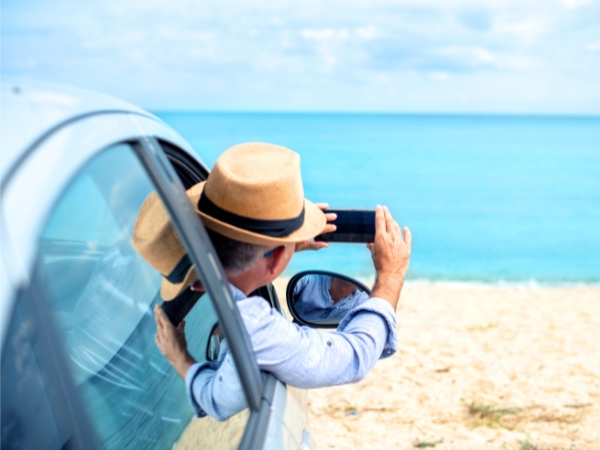
The Turks and Caicos Islands are globally renowned for their powder-soft sands; however, to see the true beauty of the islands, you need to go beyond the resort gates. Relying solely on private shuttles and unmetered taxis can severely limit your Caribbean adventure. Taxis across the main island of Providenciales operate on a per-person pricing structure rather than a flat rate, meaning brief round-trips can quickly become a huge travel expense.
On the contrary, renting a car pays for itself within days and completely shifts the dynamic of your vacation into a personalised voyage of discovery. Securing your own wheels grants you the absolute freedom to unlock spectacular remote coastlines, authentic restaurants, and natural wonders that guided tour buses simply cannot access. The islands are remarkably easy to navigate if you follow the local rules and know where to go.

Venturing beyond the confines of commercial tourist zones reveals why a self-drive adventure is the ultimate way to explore the best places in Turks and Caicos. Having a dedicated vehicle allows you to transition seamlessly from calm, shallow family lagoons to rugged, wind-whipped cliffs on the opposite end of the island.
Located in the southwestern quadrant of Providenciales, Chalk Sound Drive offers one of the most visually spectacular coastal journeys in the entire Caribbean region. This narrow road winds through a peninsula, flanked on one side by the neon-turquoise waters of Chalk Sound National Park, and on the other by the exclusive villas of the southern coast. The sound itself is a landlocked lagoon filled with a labyrinth of tiny limestone cays, inhabited by rock iguanas, where the water boasts an almost surreal, chalky pastel hue.
Driving along this route provides seamless access to two of the island's most sublime and tranquil beaches, Sapodilla Bay and Taylor Bay. Both havens feature exceptionally shallow, calm waters that stretch out for hundreds of yards, making them ideal sanctuaries for families travelling with small children. Aside from the coastline, a drive down Chalk Sound leads straight to Sapodilla Hill, which rewards adventurous travellers with panoramic views of the entire sound, alongside preserved rock carvings left behind by shipwrecked sailors.
To experience the vibrant culture and authentic heritage of Providenciales before the modern luxury resort boom, you must direct your vehicle northwest toward the Blue Hills Coastal Road. This historical settlement path hugs the northern shoreline, offering an evocative journey shaded by swaying coconut palms, pastel-coloured houses, and local churches. The atmosphere here moves at a thoroughly relaxed, traditional Caribbean rhythm that stands in beautiful contrast to the polished commercialism of Grace Bay.
The primary allure of the Blue Hills road is its celebrated, open-air beach shacks. Parking your vehicle alongside this coastal path allows you to indulge in delicious conch fritters, citrus-cured salad, and local rum punches while sitting at wooden tables buried in the sand. It is a sensory experience defined by the sound of breaking waves, the rhythmic cracking of conch shells, and old-school island hospitality that is best enjoyed without the pressure of a pre-arranged tour schedule.

For motorists seeking a genuine adventure, the journey to Malcolm’s Road Beach and Northwest Point Marine National Park is unmatched. Situated on the rugged and remote westernmost tip of Providenciales, this route leads drivers through low-lying wetlands and jagged limestone terrain. Because the secondary roads here are completely unpaved and frequently marred by sharp rocks, this expedition demands a high-clearance 4x4 vehicle.
Malcolm's Road Beach is a pristine stretch of shoreline where the barrier reef sits remarkably close to the coast, providing world-class snorkelling and diving opportunities directly from the shore. Further north along the track lies Northwest Point Marine National Park, a windswept landscape of crashing waves, marine caverns, and dramatic rock formations where you can experience the raw power of the Atlantic Ocean far from any commercial development.
Exploring the eastern and central regions of Providenciales via the Long Bay Highway and Venetian Road exposes motorists to the wilder character of the island. This route transitions smoothly from paved, residential streets into unpaved, dusty tracks that trace historical salt flats. These environments offer an entirely different perspective, revealing where the island's original salt industries thrived long before modern tourism took hold.
Among the key landmarks accessible via this drive is The Hole, a dramatic, sixty-foot-deep natural limestone sinkhole located in the heart of the Long Bay residential area. Adventurous drivers can pull over to peer into this geological wonder. Continuing onward leads directly to Long Bay Beach, a shallow expanse characterised by consistent trade winds that have established it as a premier global destination for kiteboarding.
For travellers who desire seclusion, the ultimate road trip involves taking a ferry from the eastern docks of Providenciales across to the neighbouring island of North Caicos. This connection unlocks an entirely different world, allowing you to explore two distinct islands connected by an iconic, scenic causeway. North and Middle Caicos represent the lush, agricultural heart of the country, characterised by expansive pine forests, historical plantation ruins, and quiet rural settlements.
A drive across these sister islands reveals spectacular views, beginning with the Flamingo Pond Overlook in North Caicos, where thousands of West Indian flamingos can often be observed gathering in the shallow interior marshes. Crossing the spectacular causeway brings motorists onto Middle Caicos, home to the massive Conch Bar Caves system, the largest above-ground cave network in the archipelago. The crown jewel of this journey, however, is Mudjin Harbour, where dramatic limestone cliffs, an offshore rocky islet, and sweeping crescent beaches create one of the most breathtaking views.

Driving a car in another country always requires a degree of adaptation, and the Turks and Caicos Islands are no exception. To ensure a safe, smooth, and stress-free experience, international tourists must adhere to several fundamental regulations and local customs.
Drivers must adapt to driving on the left side of the road, a practice inherited from the islands' British colonial legacy. This rule requires constant vigilance, particularly when executing right-hand turns or navigating roundabouts. Complicating matters slightly is the fact that many rental cars imported from North America feature left-hand drive configurations, meaning the steering wheel remains on the left while you travel on the left side, requiring extra spatial awareness regarding your vehicle's alignment with the road.
Visitors must master the roundabout rule, as traditional traffic lights are virtually non-existent across the islands. Modern roundabouts serve as the primary mechanism for managing major intersections along the Leeward Highway. The golden rule here is that traffic already circulating within the roundabout maintains the right-of-way. Drivers must yield to their right before entering the flow, move in a clockwise direction, and consistently utilise their left indicator to signal their intended exit, thereby preventing confusion for trailing motorists.
Compliance with local speed limits is vital for a safe drive. Speed limits across the islands are lower than many international travellers might anticipate, typically restricted to 20 mph or 30 mph within residential zones and school sectors, and topping out at a maximum of 40 mph along the open stretches of the Leeward Highway. These limits are actively enforced by local officers, and maintaining a conservative pace ensures enough reaction time should unexpected obstacles arise.
Drivers must remain constantly vigilant for deep potholes and unmarked speed bumps. While the primary highway is smooth, the secondary roads leading to secluded beaches are often unpaved and vulnerable to erosion. Local neighbourhoods also feature sharp, unpainted asphalt humps designed to control speeding, which can cause significant damage to the undercarriage of a standard sedan if approached with too much momentum.
Motorists should carefully watch out for vulnerable road users, such as pedestrians and roaming wildlife. Because dedicated sidewalks are exceptionally rare outside the Grace Bay commercial district, pedestrians frequently walk along the edge of the unlit tarmac after dusk. Additionally, wild donkeys roam freely across North and Middle Caicos, while stray dogs, affectionately known locally as potcakes, often wander across roads throughout Providenciales, necessitating a cautious and defensive driving method.

Which side of the road should I drive on? Motorists must drive on the left-hand side of the road, which is a legacy of the islands' British colonial history. However, many rental vehicles feature left-hand steering wheels, so you must maintain extra focus when making turns, especially if you are used to driving on the right.
How should I pass through roundabouts? Traffic already circulating inside the roundabout always maintains an absolute right-of-way, meaning entering vehicles must yield to their right. You must travel in a clockwise direction and remember to use your left indicator to signal your intended exit to surrounding motorists.
Can I navigate across the islands intuitively? Navigating the primary island of Providenciales is remarkably intuitive. While leading navigation applications track the island's roads with a high degree of accuracy, downloading offline maps before driving is highly recommended due to intermittent cellular reception in remote zones.
Is it safe to drive across the islands at night? While driving at night is generally safe, extra caution is required because street lighting is completely absent outside the main commercial districts. You must keep a sharp eye out for pedestrians and stray dogs or wild donkeys that might suddenly step onto the tarmac.
Should I select an economy or a 4x4 vehicle? An economy car is entirely sufficient if you intend to stay on the paved roads around Grace Bay and Chalk Sound. However, if you plan to explore the rugged, unpaved terrain of Malcolm’s Road or the North and Middle Caicos, a high-clearance 4x4 vehicle is essential.
The Turks and Caicos Islands offer far more than a standard, stationary beach trip. While the mesmerising sands of Grace Bay are undeniably spectacular, remaining exclusively within the bounds of a luxury resort means missing the true geographical depth and cultural soul of this magnificent archipelago.
From the pristine, neon-hued waters of Chalk Sound and the historic coastal heritage of Blue Hills to the flamingo-filled marshlands and dramatic limestone cliffs of North and Middle Caicos, the true magic of this country reveals itself far beyond the perimeter of guided commercial tours.
Embracing a self-drive adventure is the key to unlocking these unforgettable landscapes. Do not wait until you arrive at the airport to secure your ride. Book your car on Final Rentals, pack your reef-safe sunscreen, download an offline island map, and prepare to discover the best places in Turks and Caicos at a pace that belongs entirely to you.